
Speak To An
Attorney Now 337-433-4405
Lake Charles Maintenance and Cure Lawyer
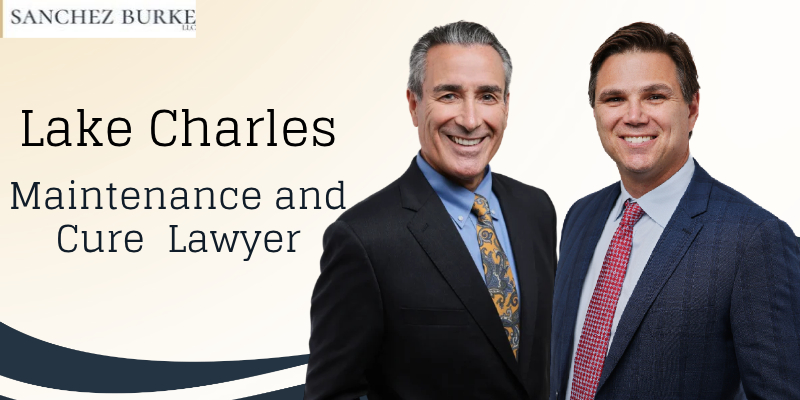
Trusted Lake Charles Maintenance and Cure Attorney
Your Paycheck Stopped the Week You Got Hurt on the Water
Your paycheck stopped the same week you got hurt. The hospital bills keep arriving. Nobody from the company returns your calls. You are wondering how you pay rent with no income coming in, whether the light-duty note from the company doctor means you have to go back before you are ready, and if asking questions will cost you your next job on the water.
Those fears are what maintenance and cure was built to end, and exactly what we handle.
Joseph Burke spent years surveying waters for the U.S. Navy and the Department of Commerce before he became a personal injury lawyer. His surveying work included the reef in Alaska’s Prince William Sound tied to the Exxon Valdez disaster. He already understands how a company thinks about a hurt worker on the water, and what a hurt worker needs next.
Tell us what happened and what stopped. A Lake Charles maintenance and cure lawyer on our team will tell you what you may be owed, in plain language, before you decide anything.
| 60+ Years Combined Experience | Avvo Superb 10/10 Rating | Top Lawyers of Acadiana 2025 | AV Preeminent Rated (Martindale-Hubbell) |
What Is Maintenance and Cure?
Maintenance is the weekly money a seaman receives to cover basic living expenses while recovering from an injury or illness in the service of a vessel. It is meant to pay for everyday necessities, like rent, utilities, groceries, and similar costs. The amount is calculated at a fair daily rate based on your actual cost of living, not a flat number the company chooses. These payments continue until you reach maximum medical improvement.
Cure is separate. It covers the medical treatment you need because of your injury or illness, including doctor visits, surgery, medication, physical therapy, and hospital care, until you recover as fully as possible.
Injuries and Illnesses That Qualify for Maintenance and Cure Pay
Maintenance and cure does not ask whose fault the accident was. If you qualify as a seaman under federal maritime law, and if you got hurt or got sick while you were assigned to a vessel, you likely qualify for maintenance and cure. It doesn’t matter who caused the accident. For example, you may be eligible for maintenance and cure benefits if you experience:
- A fall on a barge, tug, or platform working the Calcasieu Ship Channel or the Port of Lake Charles
- An injury handling lines, rigging, or cargo aboard a vessel
- A sudden illness that shows up while you are assigned to the boat, even if it has nothing to do with your job duties
- A back or shoulder injury made worse by the repetitive work you do on the water
- An injury during transport to or from an LNG facility in Cameron Parish
These examples show the wide range of injuries and illnesses that can qualify for maintenance and cure when you’re hurt or become sick in the service of a vessel.
How Maintenance and Cure Differs From a Jones Act Claim
Maintenance and cure and a Jones Act claim are not the same thing, and you may not have to pick one over the other. Maintenance and cure pays your basic living costs and medical bills no matter who caused the accident. A Jones Act claim is a separate case against your employer for negligence, and it can pay for lost wages, pain and suffering, and more. Some injured seamen along the Calcasieu Ship Channel end up with both claims running side by side, one covering you while you heal and one holding the company accountable for what caused the injury. A maritime lawyer can help you sort out multiple legal claims.
Answers for Lake Charles Seamen Fighting for Maintenance and Cure
Do I have to prove my employer did something wrong to get maintenance and cure?
No. Maintenance and cure is paid regardless of fault, as long as you were injured or got sick while assigned to a vessel. You do not need to prove negligence, unlike a Jones Act claim. There are a couple of narrow exceptions companies sometimes raise, such as willful misconduct or failing to disclose a pre-existing condition on a pre-employment health form.
When does maintenance and cure stop?
It continues until you reach maximum medical improvement, the point your doctor says further treatment will not improve your condition. A company doctor’s opinion does not automatically end your payments if your own doctor disagrees.
What if I already signed paperwork from the company?
Many injured seamen sign something before they understand what they are giving up. Contact us before you sign anything else. We can review what you already signed and tell you exactly where you stand.
Does this apply to workers on LNG and offshore support vessels in Cameron Parish?
Yes. If your work connects you to a vessel on the Calcasieu Ship Channel or supporting LNG facilities in Cameron Parish, you may qualify as a seaman under federal maritime law, even if you also work on land part of the time.
How is this different from regular workers’ compensation?
Maintenance and cure is based on your real cost of living rather than a fixed schedule. It is calculated on your actual cost of living rather than a fixed schedule, which can mean more consistent support than the workers’ compensation available to non-maritime employees.
I am not sure I count as a seaman. Does that matter?
It matters a lot, and it is not always obvious. Courts look at whether your work kept you connected to a specific vessel or fleet for a real part of your job, not just whether you ever set foot on a boat. We can review your work history and tell you where you likely stand.
Get Your Lake Charles Maintenance and Cure Payments Back on Track
You should not have to fight your own employer just to pay rent while you heal. Contact Sanchez Burke and tell us what happened, what you were told, and what stopped. We will be happy to offer you a free consultation to help you decide what to do next.
Sanchez Burke
Free Consultation With A Lake Charles
Attorney Who Can Help
For a free initial consultation, contact our Louisiana law firm online today or call us to speak with one of the firm’s talented attorneys.
awards & affiliations






1200 Ryan Street
Lake Charles, LA 70601
223 East Main Street
New Iberia, LA 70563
Schedule A Consultation
337-433-4405
Copyright © 2026 Sanchez Burke, LLC• All Rights Reserved.
*Images are obtained under license from Canva and other third-party stock image providers, with attribution included where required.
Digital Marketing By 