
Speak To An
Attorney Now 337-433-4405
Lake Charles Platform Worker Injury Lawyer
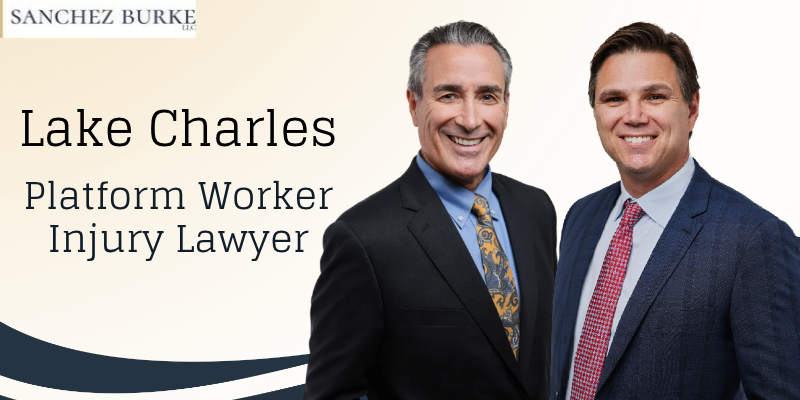
Trusted Lake Charles Platform Worker Injury Attorney
Lake Charles Platform Worker Injury Lawyers Who Know These Waters
You got hurt on a platform out in the Gulf, and now you do not know what happens next. You are not sure if this is a workers’ comp case or something bigger. You are worried the company already has paperwork waiting for your signature, and that you are up against a deadline no one told you about.
We know you have questions, and you need answers so you can make informed decisions about what to do next.
Before Joseph Burke was our maritime attorney, he spent years as a professional hydrographic surveyor for the U.S. Navy and Department of Commerce, mapping the same waters where platform crews work every day. He personally surveyed Bligh Reef, the site of the Exxon Valdez disaster. Today, as a dedicated personal injury lawyer, he understands how platform accidents happen and what clients face.
Tell us what happened out there, and we will tell you plainly what your legal options may be.
| AV Preeminent Rated (Martindale-Hubbell) 2026 | Avvo Superb 10/10 Rating | Free Consultation | 60+ Years Combined Experience |
The Kinds of Platform Accidents Our Lake Charles Injury Lawyers Handle
Platform accidents on the Outer Continental Shelf and near the Cameron Parish LNG terminals happen in specific ways. The way yours happened is one factor that helps determine which laws apply if you get hurt. We handle:
- Equipment and machinery failures: malfunctioning valves, defective rigging, and failed safety gear on fixed platforms
- Falls from height: falls through open hatches, off ladders, or off catwalks on offshore structures
- Fires and explosions: blowouts, gas leaks, and flash fires on production platforms
- Crane and rigging accidents: dropped loads and crane failures during platform lifts
- Crew transport accidents: injuries during transit to or from a platform by crew boat or helicopter
- Toxic exposure: chemical burns and exposure to hydrogen sulfide or other hazardous gases on site
These accidents can cause severe injuries including broken bones, spinal and joint damage, burns, head injuries, and other harm that can keep you off the job for months.
What a Platform Injury Can Cost You If the Wrong Law Applies
A platform injury can mean months away from work while medical bills keep piling up. If your job is covered only by the Longshore and Harbor Workers’ Compensation Act (LHWCA), you receive medical care and part of your lost wages, but nothing for pain, suffering, or a body that will never work the same way again. After a fall on a fixed platform, that limited compensation is rarely enough.
If a third party caused your accident, you may be able to recover far more. A third party may be a contractor, equipment manufacturer, vessel crew, or someone else other than your employer.
The time you have to file a claim differs significantly depending on which type of claim you file.
What Laws Cover Louisiana Platform Injuries
Not every offshore injury falls under the same law, and that confusion can cost injured workers real money. If you worked on a fixed platform on the Outer Continental Shelf, the Outer Continental Shelf Lands Act (OCSLA) usually applies. OCSLA extends the Longshore and Harbor Workers’ Compensation Act, the LHWCA, to Lake Charles platform workers, giving you medical care and partial wage replacement while you recover.
The Jones Act works differently. It covers seamen assigned to a vessel, not workers on a fixed structure. If you were hurt on a supply boat, jack-up rig, or crew boat instead of a fixed platform, a Jones Act claim may fit your case better.
Either way, you may be able to sue a negligent third party, a contractor, a vessel owner, or an equipment maker, on top of any benefits you already receive.
This reflects federal maritime law as of July 2026.
Platform Worker Injury Questions We Hear From Cameron Parish and Lake Charles Crews
Do I file a maritime workers’ comp claim or can I sue for my platform injury?
It depends on who caused your accident and what kind of structure you were on. If a third party’s negligence contributed to your injury, you may be able to receive benefits and pursue a separate claim at the same time. We can advise you of your options.
What if my employer says I only qualify for workers’ comp?
Employers and their insurers often say this before anyone has reviewed whether a third party was negligent. We investigate the full accident, not just the paperwork you were handed, before we accept that answer as final.
Does it matter if I was hurt on a fixed platform versus a boat?
Yes. Fixed platforms are generally covered by OCSLA and the LHWCA, while vessels can bring you under the Jones Act instead. The structure you were on when you got hurt is one of the first questions we ask.
What does it cost to talk to a Sanchez Burke attorney about my platform injury?
Nothing. We review offshore injury cases at no charge.
What should I do right after a platform accident?
Get medical care first, report the accident in writing, and keep a copy of everything you sign. Photos of the equipment or the spot where you fell help too, if you are able to take them. Then contact us before you sign anything else, so we can tell you what each document means for your case.
If you are still not sure which of these questions applies to you, that is exactly the kind of question we answer for free.
Talk to a Lake Charles Platform Worker Injury Lawyer Before You Sign Anything
You do not have to figure out OCSLA, the LHWCA, or the Jones Act on your own, and you do not have to sign anything the company hands you before someone reviews it first. Contact Sanchez Burke today for a free review of your platform injury case, while you still have time to act and before the clock runs out on a claim.
Sanchez Burke
Free Consultation With A Lake Charles
Attorney Who Can Help
For a free initial consultation, contact our Louisiana law firm online today or call us to speak with one of the firm’s talented attorneys.
awards & affiliations






1200 Ryan Street
Lake Charles, LA 70601
223 East Main Street
New Iberia, LA 70563
Schedule A Consultation
337-433-4405
Copyright © 2026 Sanchez Burke, LLC• All Rights Reserved.
*Images are obtained under license from Canva and other third-party stock image providers, with attribution included where required.
Digital Marketing By 